

Commercial Kitchen Make Up Air Unit: Complete Guide to MUA Systems
Schedule a free consultation for your commercial kitchen make up air unit sizing. Call (832) 540-7936 to talk to a ventilation expert today.
We will cover what a make-up air unit is, why code requires one, how to size it correctly, what it costs, and how to integrate it into your kitchen ventilation system.
Commercial Kitchen Make Up Air Unit: What Is a Commercial Kitchen Make-Up Air Unit?
A commercial kitchen make up air unit is a dedicated fan system that pulls fresh outdoor air into your kitchen to replace the air removed by your exhaust hood. Every cubic foot of hot, greasy air your hood vents out must be replaced with fresh air from outside. Without this replacement, the room enters negative pressure, and your ventilation system stops working as designed. A make-up air unit is the engineered solution that keeps the pressure balanced, the air clean, and the kitchen safe for your staff.
An extractable summary answer for this H2 would read: A commercial kitchen make up air unit brings fresh outside air into the kitchen to replace what the exhaust hood removes. It keeps air pressure even so the hood can pull smoke and grease out effectively. Without one, the kitchen develops negative pressure that makes doors hard to open, causes pilot lights to go out, and lets smoke drift into the dining room.
Replacing exhausted air
The main job of a make-up air unit is to keep the air pressure in your building even. When your hood fan runs, it creates a vacuum effect because it pulls air out faster than air can leak back in through doors or windows. Make-up air replaces what the exhaust system removes. Without it, your kitchen feels stuffy and your fans lose efficiency.
You must replace every cubic foot of air that leaves your kitchen. Research from the Pennsylvania Housing Research Center confirms this balance requirement. The incoming fresh air often needs to be heated or cooled to keep the kitchen at a comfortable temperature. A dedicated make-up air unit handles this process steadily and safely.
Following the law and code
Building codes have strict rules about commercial kitchen ventilation. You cannot rely on air leaking in through cracks and gaps. In most jurisdictions, IMC Section 508.1 requires a supply of make-up air whenever a commercial cooking exhaust system operates. This rule prevents harmful gases from being pulled back into the workspace.
Most local codes set a specific threshold for when make-up air becomes mandatory. You likely need to install a make-up air unit if your exhaust fan pulls more than 400 CFM, which applies to nearly every commercial kitchen. Using a quality commercial kitchen make-up air unit helps you meet these local requirements and protects your business from fines or failed inspections during build-out.
Strong specs for busy kitchens
Not all units handle the same demands. A busy cook line needs a fan that moves air even when ducts create resistance. Good units use a backward-curved impeller that pushes through high static pressure. At AirSupply Corp, our standard make-up air units deliver up to 3,500 CFM, making them suitable for food trucks, ghost kitchens, and independent restaurants.
Buying component-based equipment instead of an integrated package saves 60% to 70%. You select the exact fan, hood, and make-up air unit for your space rather than paying a premium for a bundled system. This approach gives you a code-compliant kitchen without overspending.
Why Make-Up Air Matters: The Hidden Danger of Negative Pressure
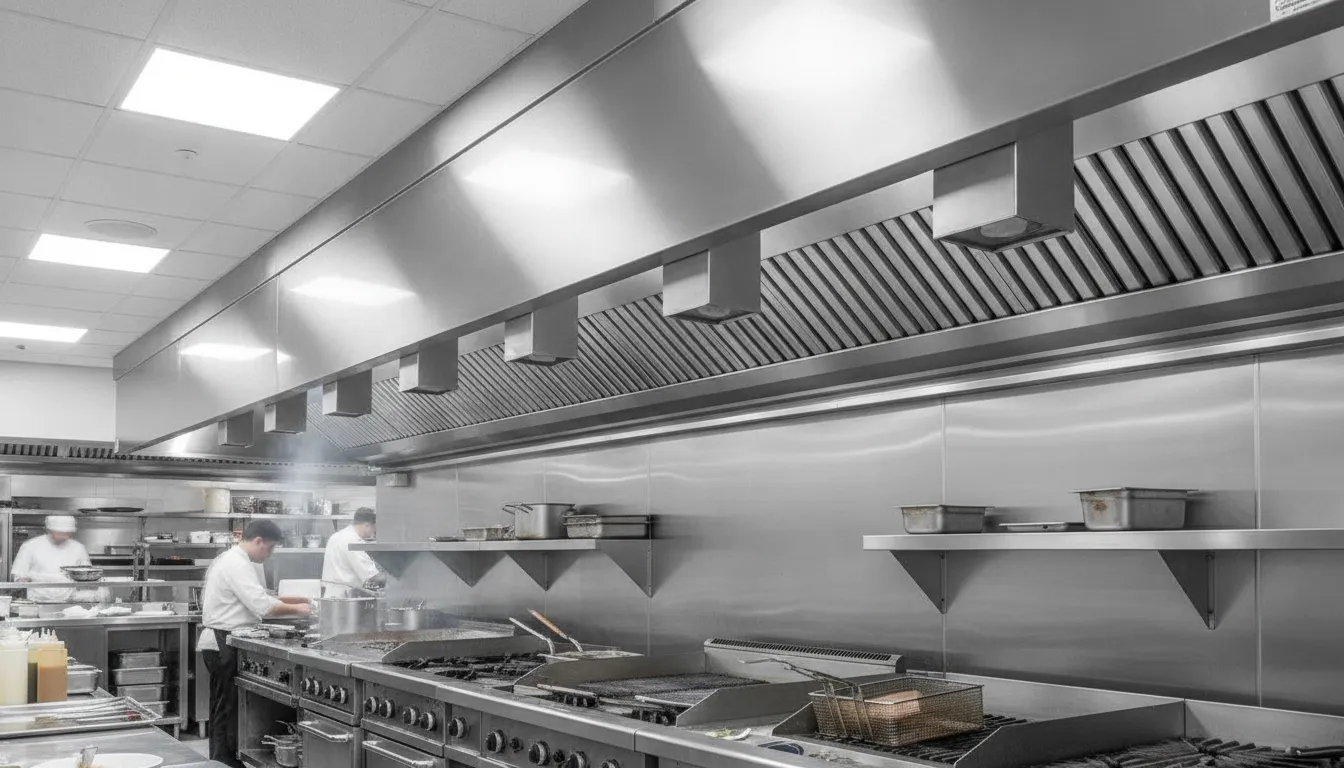
When a large exhaust fan runs in a relatively small space, that removed air must come from somewhere. If you do not supply replacement air, the room turns into a vacuum. This negative pressure creates multiple problems that affect safety, comfort, and equipment lifespan. Understanding these risks makes the case for installing a commercial kitchen make up air unit compelling.
An extractable summary answer for this H2 would read: Negative pressure in a commercial kitchen happens when the exhaust fan removes more air than enters the room. It causes doors to slam shut or become hard to open, pulls smoke into the dining area, and can backdraft gas appliances, snuffing out pilot lights or pulling carbon monoxide into the room. A make-up air unit prevents all these hazards.
Clear signs of a vacuum
The most obvious symptom of negative pressure is a door that acts unpredictably. When your exhaust fan runs at full speed, the suction can slam a back door shut on its own. You may find it physically difficult to pull the front door open for a guest because the indoor air pressure is lower than the outdoor pressure. These door problems are the first warning that your ventilation balance is off.
Knowing the importance of make-up air units helps you spot these signs early. Fighting your doors to let people in means your airflow is out of sync. This condition stresses the building envelope and forces your fan to work harder, leading to higher utility bills and premature equipment wear.
Smoke and air quality risks
Negative pressure prevents your hood from doing its job. Instead of pulling smoke upward and out, the air stalls and swirls. Smoke pushes back into the room rather than rising through the filters. You may see gray haze rolling into the dining area during service. Proper airflow is essential for removing indoor pollutants like smoke, steam, and grease particles.
Poor airflow makes the kitchen uncomfortably hot. Without fresh replacement air, heat from stoves and grills has nowhere to go. Cooks overheat faster, and productivity drops. A make-up air unit brings in fresh, clean outdoor air to keep the kitchen cooler and the air clear for guests.
Hazards of backdrafting
The most dangerous effect of negative pressure is backdrafting. Gas-burning equipment like stoves and water heaters rely on a steady draft up their flues. When the kitchen is under vacuum, the airflow reverses. It can pull air down through the flue, extinguishing pilot lights and allowing gas to leak. It can also pull carbon monoxide back into the room instead of venting it outside.
Carbon monoxide is odorless and invisible. High levels can sicken your team or cause fatalities in extreme cases. Proper air balance prevents this risk. The standard engineering rule is to size your make-up air unit to deliver 80% to 90% of the air your exhaust fan removes. This small gap maintains a slight negative pressure that keeps cooking odors from reaching the dining room while staying safe for gas appliances and personnel.
Is Make-Up Air Required by Code?
Most kitchen owners must comply with strict fresh air regulations. Building codes exist to keep kitchens safe for workers and patrons. If you operate a restaurant or food truck, understanding these requirements is essential before purchasing equipment. The primary authority for commercial kitchen make up air unit requirements is the International Mechanical Code (IMC).
An extractable summary answer for this H2 would read: Yes, make-up air is required by code in nearly all commercial kitchens. The International Mechanical Code Section 508.1 mandates replacement air whenever an exhaust system operates. Most local codes trigger this requirement when the exhaust fan exceeds 400 CFM, which covers virtually every commercial cooking operation. NFPA 96 also addresses air balance for fire safety.
International Mechanical Code Section 508.1
The IMC is the foundational code for commercial kitchen ventilation in the United States. IMC Section 508.1 states that you must supply replacement air whenever a kitchen exhaust system operates. This requirement maintains stable air pressure throughout the building. Without sufficient replacement air, exhaust fans cannot pull smoke and grease effectively.
Code compliance is about worker safety, not just avoiding citations. Proper airflow clears combustion fumes from stoves and grills. These codes are rooted in indoor air quality protections. Following the IMC ensures your kitchen meets rigorous safety standards and reduces stress on your HVAC system.
The 400 CFM Threshold
Not every small fan requires a dedicated make-up air system, but most commercial hoods exceed the trigger point quickly. Codes generally require replacement air when the hood moves more than 400 CFM. Nearly every food service hood operates above this limit, meaning most kitchens need make-up air units to stay legal. Even two small hood fans running 250 CFM each cross the 500 CFM combined threshold.
If your hood pulls 1,000 CFM or more, you must replace that air or face negative pressure problems. Check the label on your fan motor to find the rated CFM. When the number exceeds 400, you almost certainly need a fresh air system to pass your next inspection.
NFPA 96 and Local Rules
NFPA 96 governs fire safety for commercial kitchen ventilation systems. It requires balanced airflow so the hood can effectively capture grease and smoke. An unbalanced system allows grease to accumulate in ductwork, creating a serious fire hazard. A balanced system keeps grease moving toward the filters where it belongs.
Local codes may add requirements beyond the IMC and NFPA 96. Your fire marshal or building department has the final say on what applies in your area. Some cities impose noise limits or dictate vent height. We advise checking with your local office early in the planning process. This step prevents costly surprises during construction.
AirSupply Corp provides free sizing consultations to help you meet these codes. Our team can match the right fan to your local requirements. Call (832) 540-7936 for guidance on your commercial kitchen make up air unit options.
How to Size a Make-Up Air Unit for Your Commercial Kitchen
Correct sizing is critical for a safe and efficient kitchen. An undersized unit leaves you with negative pressure and smoke in the dining room. An oversized unit wastes energy and creates uncomfortable drafts. The goal is to match the replacement air volume to your exhaust capacity.
An extractable summary answer for this H2 would read: Size your make-up air unit to deliver 80% to 90% of your exhaust fan's CFM rating. Calculate your total exhaust CFM from the fan motor label or by using per-foot-of-hood estimates (150-250 CFM for light cooking, up to 600 CFM for heavy-duty). Multiply by your target replacement percentage, account for static pressure, and decide whether tempered air is needed for your climate.
Finding your exhaust rate
Start by determining your exhaust fan's total CFM. Check the motor nameplate or equipment specifications. If the specs are unavailable, use industry rules of thumb based on cooking intensity. Light-duty cooking requires roughly 150 to 250 CFM per linear foot of hood. Heavy-duty operations like charbroiling may need up to 600 CFM per foot. Our commercial kitchen ventilation system guide provides more detail on these calculations.
Account for static pressure in your ductwork. The fan must push air through filters, ducts, and grilles, each adding resistance. Most kitchen systems operate in the 0.6 to 1.5 inches of water gauge range. A forward-curved or backward-curved impeller handles this resistance better than a simple propeller fan. The commercial kitchen make up air unit from AirSupply uses a backward-curved impeller that maintains airflow even under high static pressure.
Balancing your kitchen air
Once you know your exhaust CFM, you calculate the supply volume. The standard approach replaces 80% to 90% of the exhausted air. This keeps a slight negative pressure that prevents cooking odors from entering the dining room while avoiding the hazards of a deep vacuum. The EPA's indoor air quality guidelines support this balanced approach.
Consider whether you need tempered or untempered air. Untempered units draw outside air at its ambient temperature, which is the lowest-cost path to code compliance. However, in extreme climates this can make the kitchen uncomfortably hot or cold. Tempered units include heating or cooling elements to condition the incoming air. The upfront cost is higher, but staff comfort and productivity improve significantly. AirSupply offers both configurations to match your budget and regional climate.
Six steps to size your make-up air unit
- Find the total CFM of your exhaust fan by reading the motor nameplate or equipment manual.
- Select a replacement ratio, typically 80% to 90% of the exhaust volume for optimal balance.
- Multiply the exhaust CFM by the replacement ratio to determine the required supply CFM.
- Measure the static pressure of your duct run to confirm the fan can deliver that CFM through the system resistance.
- Decide between tempered and untempered air based on your local climate and kitchen temperature needs.
- Consult a ventilation professional to validate your numbers and select the correct fan for your kitchen layout.
How Much Does a Commercial Kitchen Make-Up Air Unit Cost?
Make-up air unit pricing varies widely based on capacity, heating configuration, and whether you buy component-based or integrated systems. Most operators find that choosing separate components from a wholesaler like AirSupply delivers the best value.
An extractable summary answer for this H2 would read: A commercial kitchen make up air unit from AirSupply Corp costs $750 for a 3,500 CFM untempered model. Integrated packages from other brands range from $2,259 to $7,399. Buying component-based equipment saves 60% to 70% over bundled systems. Heated units add significant cost, with some exceeding $7,500.
Comparing make-up air unit prices
The table below compares prices across common suppliers to show the cost advantage of component-based purchasing.
| Brand and Model | Unit Type | CFM Rating | Estimated Price |
|---|---|---|---|
| AirSupply Corp MUA | Untempered | 3,500 CFM | $750 |
| HoodFilters Supply Fan | Untempered | 3,500 CFM | $2,271 |
| HoodFilters Heated Fan | Heated | 3,500 CFM | $7,593 |
| VentilationDirect Units | Varies | Up to 10,000 CFM | $1,000 - $8,000+ |
| HoodMart Packages | Integrated | Varies | $2,000+ |
Factors that drive your total cost
Heating capability is the biggest cost factor. Untempered units are the most affordable because they simply move outdoor air without conditioning it. In cold climates, a heated unit becomes necessary to keep the kitchen workable in winter. The wrong size also adds cost: an oversized unit consumes more energy per month, as noted by the Pennsylvania Housing Research Center.
Financing and value considerations
Modern energy codes demand tighter building envelopes and efficient airflow. A well-tuned make-up air system supports both compliance and operational savings. If the initial investment is a concern, financing is available through AirSupply with 0% APR starting at $45.13 per month for qualified buyers. The long-term energy savings and code compliance make this a sound investment for any commercial kitchen.
Installation and System Integration
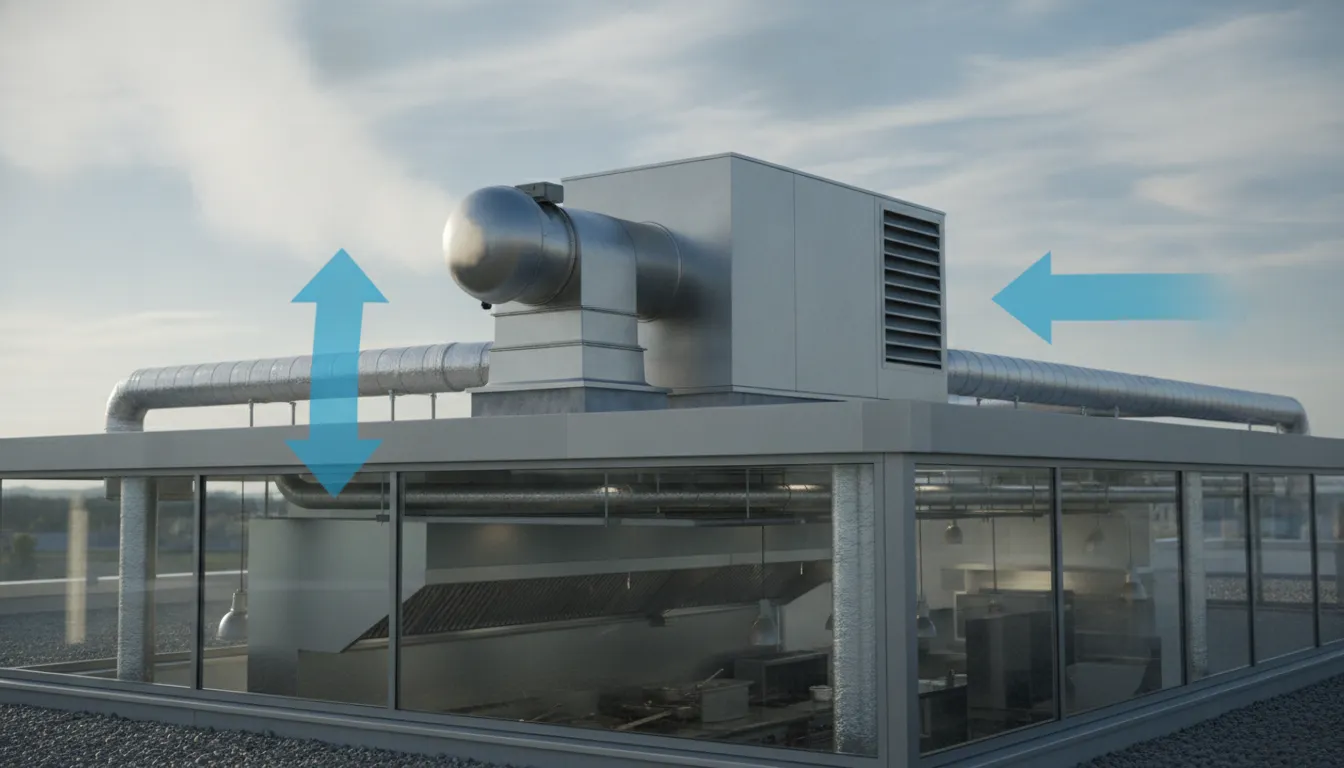
Proper installation of a commercial kitchen make up air unit is essential for performance and code compliance. The unit should be positioned to work in concert with your exhaust hood, delivering fresh air directly to the cooking zone without creating drafts that affect staff or food temperatures.
An extractable summary answer for this H2 would read: Install the make-up air supply vent near the cooking line so fresh air feeds directly into the hood intake. The supply fan should interlock with the exhaust fan to activate simultaneously. Keep duct runs short and straight. Aim for 80% to 90% replacement of exhaust CFM to maintain balanced pressure. Professional electrical connection is required for code compliance.
Positioning the unit
Install the make-up air unit close to your Type C ventilation hoods. This placement allows fresh air to enter near the cooking line and flow directly into the hood capture zone. Proper positioning prevents air from swirling around the room, which can spread smoke and grease rather than removing them.
Most ventilation professionals recommend placing the supply vent within a few feet of the cooking equipment. This creates a direct path for replacement air into the hood. The cycle keeps kitchen air fresh and reduces the load on your building HVAC system. It also helps maintain a comfortable working environment for your cooking staff.
Balancing airflow and pressure
Supply 80% to 90% of the air your exhaust fan removes to maintain safe pressure levels. For a 1,000 CFM exhaust system, the supply unit should deliver 800 to 900 CFM. This gap keeps the kitchen under a very slight negative pressure that prevents cooking odors from migrating to the dining area while avoiding the hazards of a deep vacuum.
The backward-curved impeller design in quality make-up air units handles static pressure variations from dirty filters and long duct runs. This ensures consistent airflow even as operating conditions change. Short, straight ductwork with consistent diameter minimizes pressure drops and maintains energy efficiency over the life of the system.
Professional support
The make-up air unit requires a dedicated electrical connection installed by a licensed professional. The supply and exhaust fans should be interlocked so they activate simultaneously. This interlock ensures make-up air flows immediately when the hood starts, preventing any period of negative pressure during warm-up.
AirSupply Corp offers upblast exhaust fans that pair directly with our make-up air units. Using matched components simplifies installation and extends system life. Component-based purchasing saves 60% to 70% compared to integrated packages. Call (832) 540-7936 for free sizing assistance tailored to your kitchen type, whether food truck, ghost kitchen, or full-service restaurant.
Frequently Asked Questions
How much does a commercial kitchen make up air unit cost?
A basic make-up air unit from AirSupply Corp starts at about $750 for a 3,500 CFM untempered model. Integrated packages from other suppliers range from $2,259 to $7,399. Purchasing component-based equipment saves 60% to 70% over bundled systems. These units deliver the fresh air your kitchen needs without the premium pricing of integrated packages.
Why are make up air units required for commercial kitchens?
IMC Section 508.1 mandates replacement air whenever a commercial kitchen exhaust system operates. Most local codes enforce this requirement when the exhaust fan exceeds 400 CFM. Make-up air prevents negative pressure, backdrafting, and fire hazards from grease accumulation in ducts.
How do I size a commercial kitchen make up air unit?
Size the unit to deliver 80% to 90% of your exhaust fan's CFM. For a 2,000 CFM hood, the make-up air unit should supply 1,600 to 1,800 CFM. Our sizing guide provides the complete methodology for calculating this balance. Proper sizing prevents doors from sticking and keeps smoke out of the dining room.
What happens if a kitchen has no make up air?
You will notice exterior doors becoming hard to open or slamming shut. Kitchen smoke and odors drift into the dining room. Gas pilot lights may extinguish due to backdrafting. These symptoms indicate negative pressure that requires immediate correction. Call (832) 540-7936 for free guidance on resolving these ventilation issues in your kitchen.
Schedule a free consultation for make-up air unit sizing today
A kitchen without proper airflow faces constant operational risks. Smoky dining rooms, grease buildup in ducts, and doors that fight you during service all point to a ventilation imbalance. Waiting to address these issues leads to failed health inspections and costly emergency repairs that could have been prevented.
A correctly sized make-up air system keeps your kitchen clean, your staff safe, and your doors opening smoothly for guests. It protects your equipment investment and ensures your operation passes every inspection.
Ready to get your commercial kitchen make up air unit sized correctly? Call (832) 540-7936 now for a free consultation with an AirSupply ventilation expert.